
Smell gas or hear it hissing? Get everyone outside. Do not use switches, flames or phones inside. If there is immediate danger, call 000. For a leak at the meter or bottle, call your gas network or LPG supplier. Then call us for repairs.
Where to start with gas
Some Mountains homes have mains natural gas. Many others, especially further out and uphill, run on LPG bottles. The work is similar, but the supply and who you call in an emergency are different.
- Gas heaters and fireplaces: supply, install, service and safety checks
- Cooktops and ovens: new installs and replacements
- Gas hot water: storage and continuous flow units
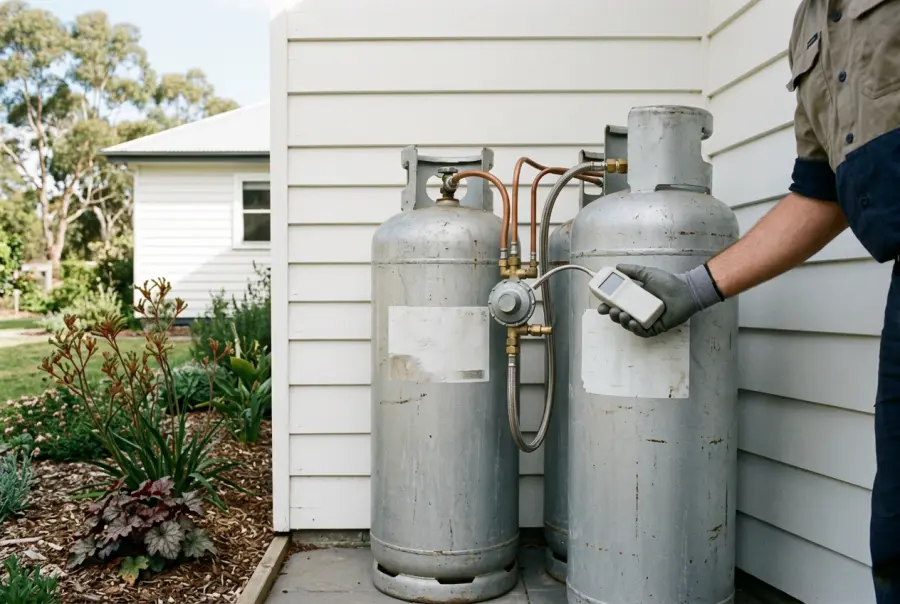
- LPG bottle connections: regulators, hoses and changeovers
- New gas points, extensions and conversions
- Gas leak testing and pipework checks
Gas heating in a cold climate
Heating does a lot of work from May to September here. A flued gas heater needs to be serviced, with the flue clear and the burner running properly. A poorly running heater can produce carbon monoxide, which has no smell.
Never block or seal vents in a room with a gas heater, even when it is freezing. Fix draughts elsewhere. If your heater sooty marks around the heater, yellow or orange flames, or a pilot that keeps going out, switch it off and get it checked.
Need a plumber in the Blue Mountains?
Call 0495 053 644Older homes and gas
Older Mountains cottages often have gas pipework that has been added to over decades, sometimes by different people. We check pipe condition, joints, supports and fittings, and tell you what is sound and what is not.
Renovating? Plan gas points early. Moving a cooktop or adding a heater is far easier before walls are closed up. See our renovation plumbing page.
What licensed means
In NSW, gas fitting is licensed work. The gasfitter tests the work and provides the required compliance paperwork. Unlicensed gas work can void your insurance and put your household at risk.
You can check any NSW licence on the NSW Government licence check at service.nsw.gov.au.
Rebuilding or upgrading
Home rebuilt after fire, or adding a new wing? We run new gas lines to modern standards, including bottle positions that meet clearance rules from windows, doors and ignition sources.
Not sure what your home needs? Ask us. A short visit now beats a wrong install.
Gas safety at home
Know where your gas meter or bottle isolation valve is, and how to shut it off. Show everyone in the house.
Install a carbon monoxide alarm if you use a gas heater, and test it. Carbon monoxide has no smell and builds up in closed rooms.
Never use a barbecue, outdoor heater or camp stove inside. Keep flammable items well clear of gas heaters and flues.
Leaks often show up as a hissing sound, a rotten-egg smell or dead patches of grass around a buried line. Any of these needs action straight away, and the steps are in the box at the top of this page.
If an appliance is old, discoloured around the burner or has a pilot that keeps failing, get it checked before winter rather than during the first cold snap.
Gas leak help
For more on gas leak safety and what to do, see bluemountainsgasleak.com.au.
Common questions
Can you convert my home from LPG to natural gas?
Where mains gas is available at your address, often yes. Appliances may need conversion or replacement. Availability varies by street, so check with the network first.
How often should a gas heater be serviced?
A service every year or two is sensible, ideally before winter. Follow the manufacturer's advice for your model.
Do you change LPG bottles?
Bottle swaps are done by your LPG supplier. We handle the regulator, hoses, pipework and connections.
I can smell gas. What do I do?
Get everyone outside and call 000 if there is danger. The full steps are in the box at the top of this page.